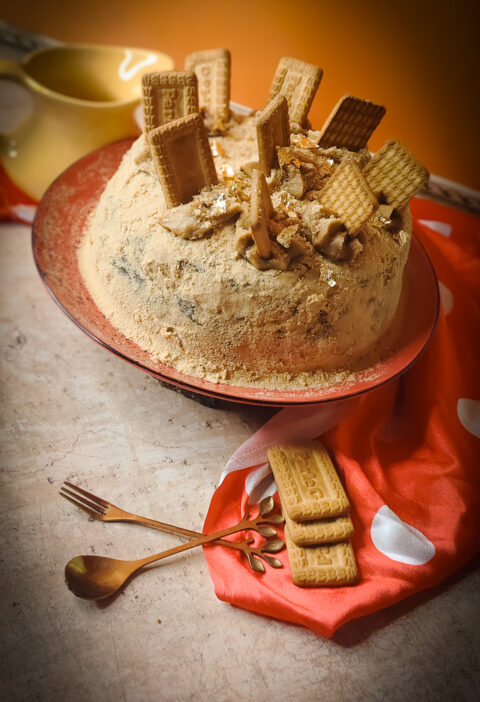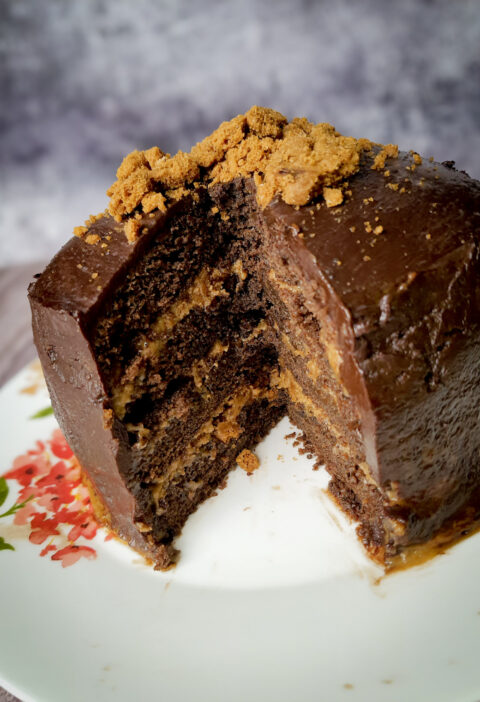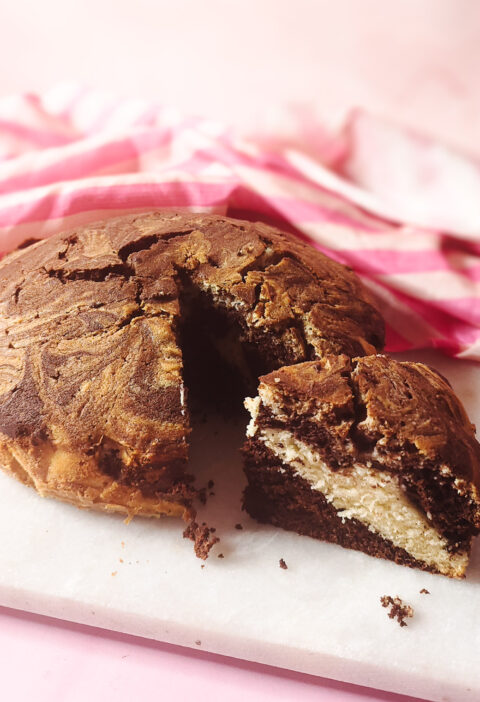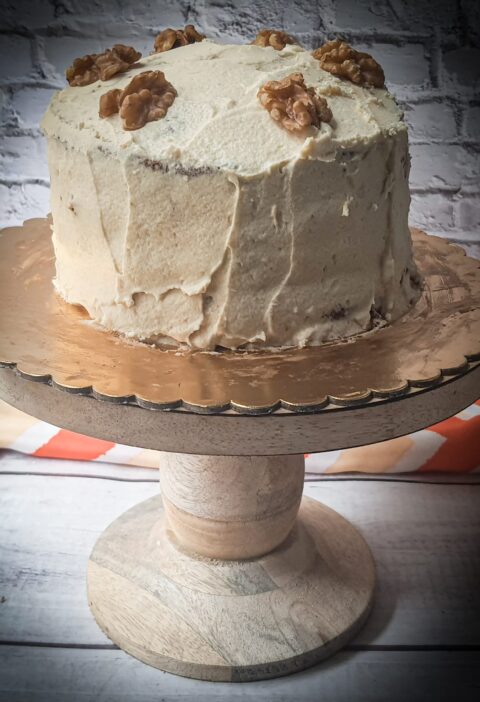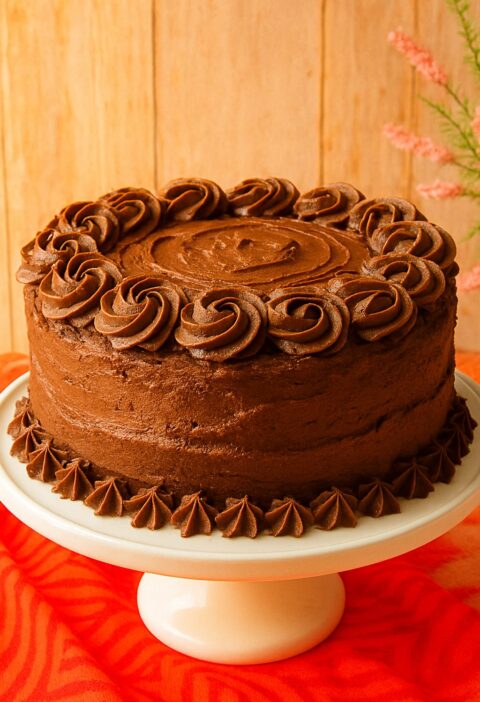

This cake is unapologetically rich — the kind of dessert that feels both nostalgic and deeply indulgent at the same time. The foundation is a fudgy dark chocolate cake, dense yet soft, with the deep bitterness of cocoa gently lifted by coffee and mellowed by the tang of Greek yogurt. The crumb is moist and plush, leaning toward the texture of a brownie but still tender enough to slice cleanly.
Between the layers sits a generous spread of malt buttercream — light, creamy, and slightly caramel-like, with the unmistakable flavour of malted milk. It adds a softness and warmth that balances the intensity of the chocolate without making the cake overly sweet.
At the very centre lies a hidden core of dark chocolate ganache, smooth and velvety. The ganache forms a luxurious ribbon between the layers, adding a deeper, almost truffle-like richness to every bite.
Just before the layers come together, malt powder is sprinkled over the filling, creating little bursts of toasted malt flavour that melt gently into the ganache and buttercream. This small detail transforms the cake — giving it pockets of malted depth that echo the flavour of old-fashioned chocolate malt drinks.
The final effect is beautifully layered in flavour:
first the deep chocolate of the cake, then the creamy malt buttercream, followed by the dark silkiness of ganache and the toasted whisper of malt. It is a cake that feels both comforting and decadent, like a chocolate malt milkshake reimagined as a celebration cake.

Malt Powder — What It Is and Why It Matters in This Cake
Malt powder is made from grains—most commonly barley—that are soaked, allowed to sprout slightly, then dried and ground into a fine powder. When barley germinates, natural enzymes convert its starches into sugars, which creates malt’s characteristic toasted, slightly caramel-like sweetness.
In baking, you will most often encounter malted milk powder, which combines malted barley with milk solids and sometimes a little wheat flour. It is the same nostalgic flavour found in classic drinks like malted milk or chocolate malt shakes.
The flavour is subtle but distinctive: warm, creamy, lightly toasted, and faintly biscuit-like.
How Malt Powder Works in This Cake
In your cake, malt powder plays several roles rather than acting as a single ingredient.
1. Deepens the flavour of the chocolate cake
When added to the batter, malt powder gives the chocolate a rounder, fuller taste. Instead of a sharp cocoa bitterness, the chocolate becomes deeper and slightly toasted—almost like the flavour of a chocolate biscuit or brownie edge.
2. Creates the signature flavour of the buttercream
In the malt buttercream, malt powder dissolves into the frosting and gives it a nostalgic malted-milk taste. The frosting becomes creamy with hints of caramel, biscuit, and milk chocolate notes.
3. Enhances the ganache and filling
When sprinkled between layers or mixed into ganache, the malt powder adds little bursts of toasted sweetness. It melts slightly into the chocolate and buttercream, creating pockets of flavour that make the cake taste richer and more complex.
4. Balances the bitterness of dark chocolate
Dark chocolate can be intense. Malt softens that intensity without simply adding sugar. It provides warmth and depth rather than straightforward sweetness.
The Overall Effect in the Cake
When all the components come together—
fudgy chocolate sponge, malt buttercream, ganache, and the dusting of malt powder—the cake develops a flavour very similar to a luxurious chocolate malt drink turned into a layered dessert.
It is chocolatey, creamy, and slightly toasted, with a comforting old-fashioned flavour that feels both nostalgic and indulgent.
Ingredients and Why They Are Used in the Cake
All-purpose flour
Provides the basic structure of the cake. It forms the framework that holds the crumb together while keeping the cake soft and sliceable.
Dark cocoa powder
Gives the cake its deep chocolate flavour and rich colour. Cocoa also contributes to the slightly fudgy texture of the crumb.
Malt powder
Adds a warm toasted sweetness that deepens the chocolate flavour. It gives the cake its characteristic malted milk taste and nostalgic richness.
Caster sugar
Sweetens the cake and helps create a tender texture by holding moisture in the batter during baking.
Butter
Adds richness and flavour while coating the flour particles in reverse creaming, which helps produce a fine, soft crumb.
Eggs
Provide structure and stability to the cake. They also contribute moisture and help the batter emulsify smoothly.
Greek yogurt
Keeps the cake moist and tender while adding a slight tang that balances the sweetness and intensifies the chocolate flavour.
Baking powder
Acts as a leavening agent that helps the cake rise and develop a light, soft crumb.
Baking soda
Reacts with the acidity of cocoa and yogurt to give additional lift and improve the cake’s texture.
Salt
Enhances and balances all the flavours, especially the chocolate and malt notes.
Vanilla extract
Adds aromatic warmth that rounds out the chocolate flavour and prevents the cake from tasting flat.
Instant coffee
Does not make the cake taste like coffee but deepens and intensifies the chocolate flavour.
Hot water
Helps dissolve cocoa and coffee while loosening the batter, which produces a moist and tender cake.
Milk (for malt soak)
Adds moisture to the cake layers and carries the flavour of malt deeper into the sponge.
Unsalted butter (for buttercream)
Forms the base of the frosting, giving it richness, structure, and a smooth creamy texture.
Icing sugar
Sweetens the buttercream and helps it become light, stable, and spreadable.
Dark chocolate (for ganache)
Creates the rich, silky filling that adds intensity and depth between the layers.
Fresh cream
Melts the chocolate into a smooth ganache and gives the filling its velvety texture.
Tips to Remember When Making This Cake
Use good quality cocoa and dark chocolate.
Since chocolate is the dominant flavour in this cake, using a good quality cocoa powder and dark chocolate will make a noticeable difference in depth and richness.
Measure malt powder carefully.
Malt has a strong flavour; the right amount adds warmth and complexity, but too much can make the cake taste slightly bitter or overly toasted.
Use thick Greek yogurt.
Greek yogurt keeps the cake moist and tender. If the yogurt is watery, the batter can become too loose and the cake may lose its fudgy texture.
Do not overmix the batter.
Once the liquid ingredients are added, mix only until the batter becomes smooth. Overmixing can make the cake dense and tough.
Let the ganache cool before using.
If the ganache is too warm, it will run out of the cake layers. It should be thick and spreadable when used as a filling or frosting.
Soak the cake layers lightly.
The malt milk soak adds flavour and moisture, but too much can make the cake heavy or soggy. A gentle brushing is enough.
Sprinkle malt powder between layers carefully.
A light sprinkle gives little bursts of malt flavour in every bite without overpowering the chocolate.
Always assemble a completely cooled cake.
If the cake layers are even slightly warm, the buttercream and ganache will melt and the layers may slide.
Chill the cake briefly after the crumb coat.
This helps set the frosting and makes the final ganache coating smooth and neat.
Allow the cake to rest before slicing.
Letting the assembled cake sit for an hour helps the flavours settle and gives cleaner slices.
Ingredients
Instructions
- METHOD (Reverse Creaming)
- Step 1: Prep
- Preheat oven to 170°C.
- Line and grease cake pans.
- Step 2: Combine Dry Ingredients
- In the bowl of a stand mixer combine:
- Flour
- Cocoa powder
- Malt powder
- Sugar
- Baking powder
- Baking soda
- Salt
- Mix briefly so everything is evenly distributed.
- Step 3: Reverse Creaming
- Add the soft butter in chunks.
- Mix on medium speed until the mixture resembles fine damp sand.
- This coats the flour and malt in fat and prevents a dry crumb.
- Mix 1–2 minutes only.
- The mixture should hold slightly when pressed.
- Step 4: Add Wet Ingredients
- Whisk together:
- Eggs
- Greek yogurt
- Vanilla
- Add this mixture gradually while mixing on low speed.
- Dissolve the instant coffee in hot water, then pour it in slowly.
- Scrape the bowl well and mix just until smooth.
- Do not overbeat.
- The batter will be smooth and moderately thick.
- Step 5: Bake
- Divide evenly between pans.
- Bake for 35–40 minutes.
- Cool completely before soaking and assembling.
- Why Reverse Creaming Works Well Here?
- Malt powder absorbs moisture easily. By coating the dry ingredients with butter first, the cake develops a velvety, tight crumb that slices cleanly and absorbs malt soak beautifully without collapsing.
- Strong Malt Milk Soak
- Whisk until completely smooth and lump-free.
- The soak should taste like light malted milk, not overly sweet.
- Use about 90–100 g soak per cake layer.
- Malt Buttercream
- Method
- Beat butter until pale and fluffy.
- Add icing sugar gradually while mixing.
- Add malt powder and vanilla.
- Beat until smooth and creamy.
- Adjust consistency with cream.
- The buttercream should taste like a thick malted milkshake frosting.
- Dark Chocolate Malt Ganache Frosting
- Heat cream until just steaming.
- Pour over chopped chocolate and let sit 2 minutes.
- Stir until smooth.
- Whisk in malt powder.
- Add butter and mix until glossy.
- Let the ganache cool until spreadable but soft before filling it in the center.
- Assembly of the Dark Chocolate Malt Cake
- Level the cakes
- Once the cakes are completely cool, level the tops with a serrated knife so the layers sit evenly.
- Place the first layer
- Set one cake layer on a cake board or serving plate.
- Add malt milk soak
- Lightly brush the cake surface with the malt milk soak to keep the sponge moist and enhance the malt flavour.
- Spread malt buttercream
- Using an offset spatula, spread an even layer of malt buttercream over the cake.
- Add ganache filling
- Spread a thick ribbon of dark chocolate ganache in the centre of the buttercream layer.
- Sprinkle malt powder
- Lightly sprinkle malt powder over the filling to add bursts of toasted malt flavour.
- Place the second cake layer
- Gently place the second cake layer on top and press lightly to secure the layers.
- Soak the top layer
- Brush the second layer lightly with malt milk soak.
- Apply crumb coat
- Spread a thin layer of buttercream around the entire cake to seal in crumbs.
- Chill the cake
- Refrigerate for about 20 minutes so the crumb coat firms up.
- Final frosting
- Frost the cake with the remaining malt buttercream, spreading evenly over the top and sides.
- Finish the cake
- Lightly dust the top with malt powder for flavor and decoration.
- Rest before slicing
- Let the cake rest for 30–60 minutes so the layers set and the flavors settle.